Google Chrome is currently developing a new privacy feature called IP Protection. This feature is designed to limit the exposure of users’ IP addresses in third-party contexts while using incognito mode on Android and desktop platforms, thereby enhancing privacy by preventing cross-site tracking based on IP addresses.
An IP address is essential for routing web traffic, but it can also be used to track users across websites, much like cookies. Many data trackers rely on IP addresses to monitor user activities and build profiles. As Chrome and other browser vendors have blocked third-party cookies, at least in the incognito mode, IP-based tracking has gained significance, making privacy measures like IP Protection more relevant.
How IP Tracking Works
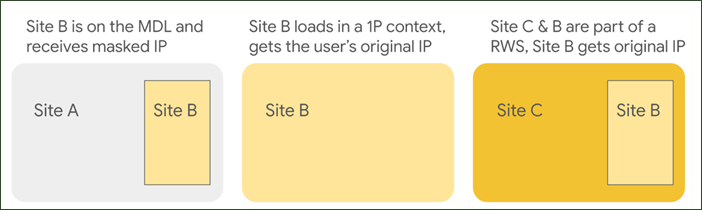
The IP Protection feature will be available for the users in incognito mode. Chrome will mask users’ IP addresses for certain third-party domains included in its Masked Domain List, which typically engage in user tracking or marketing-related data collection.
Instead of completely hiding IPs, Chrome will route traffic through a two-hop proxy system, where Google operates the first proxy (which sees the user’s IP but not the destination) and an external Content Delivery Network (CDN) operates the second proxy (which sees the destination but not the user’s IP). This ensures no single entity can track both the user’s identity and their browsing activity.
Comparison with VPNs
Unlike VPNs, which encrypt all traffic and allow users to select locations, IP Protection only masks IPs for certain third-party domains and maintains a user’s actual country or region. However, it will work alongside VPNs without interference.
Intelligent Tracking Prevention in Safari
It’s worth mentioning that Apple’s Safari browser offers features similar to Google Chrome’s upcoming IP Protection to enhance user privacy. Safari’s Intelligent Tracking Prevention (ITP) utilizes machine learning and on-device intelligence to prevent cross-site tracking by hiding IP addresses from known trackers. Additionally, Safari provides options to hide IP addresses from trackers or both trackers and websites.
Safari also offers an iCloud Private Relay service, which masks IP addresses and encrypts entire internet traffic.
The IP Protection feature in Google Chrome is expected to launch around May 2025, starting in select regions.